
 Flappy Bird Origin
A faithful browser recreation of Dong Nguyen's 2014 viral hit — tap to flap through gaps between pipes and chase your high score one point at a time.
Flappy Bird Origin






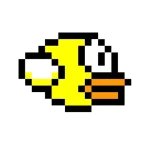











The original Flappy Bird vanished from app stores in February 2014 — its creator Dong Nguyen pulled it at the peak of its fame, overwhelmed by the attention it was drawing. Flappy Bird Origin is a browser recreation that stays true to what made the original work: a small bird, a row of green pipes, a gravity physics model that gives you just enough control to feel responsible for your own mistakes, and a score that counts up one point at a time.
Every run is a single loop. You tap or click to make the bird flap and gain a little height, then gravity takes over and you manage the fall to thread through the next gap. There are no power-ups, no increasing speed, no stage variation — just the same gap width and the same pipe rhythm, every time. The difficulty is entirely in reading your bird’s momentum: flap too early and you clip the top pipe; hold off too long and you drop into the bottom one. Most players clear zero to three pipes on their first session; breaking ten feels like a genuine achievement; twenty is where bragging rights begin.
Controls
- Mouse: Left-click to flap
- Keyboard: Spacebar to flap
- Mobile / Tablet: Tap the screen to flap
Tips
- One deliberate tap per gap: Each tap sends the bird on a fixed arc. A single well-timed tap at roughly mid-gap height is usually all you need — adding correction taps mid-gap causes overshoot more reliably than it helps.
- Look at the gap ahead, not the bird: The bird stays in peripheral vision naturally. Shift your focus to the opening you’re approaching and you’ll have an extra moment to decide when to flap.
- Restart the instant you hit something: The run ends in a fraction of a second. Hit spacebar and go again without pause — dwelling on a miss carries tension into the next attempt.
- Find a rhythm: The gap spacing is consistent across every run. After a few dozen attempts you can settle into a metered tap cadence rather than reacting to each pipe individually. That cadence, not reflexes, is what pushes scores past fifteen.